
First Home Buyer Loans in Brisbane: How the Process Actually Works for Busy Professionals
Published by Lifte Loans | Author: Jolly Dua, Credit Representative 531734, National Mortgage Brokers (ACL 391209)
For a lot of professionals in Brisbane, Logan, Ipswich, the Gold Coast and the Sunshine Coast, buying a first home isn’t an early-twenties milestone, it’s something that happens after years of renting, building a career, and finally feeling ready. If that sounds like you, this guide walks through how the finance side actually works, without the generic “save a deposit and talk to your bank” advice you’ve probably already heard a dozen times.
Why the process feels harder than it should
Most first home buyer content online is written for a general audience, which means it skips over the things that actually matter for someone with a stable income, some savings, and not a lot of spare time to research lending policy. If you’re working full time, possibly running a side business, or supporting family overseas as well as saving here, your situation has more moving parts than a basic checklist accounts for.
Step 1: Understanding your borrowing power properly
Borrowing power isn’t just income minus expenses. Lenders assess your income type (PAYG, contract, self-employed, or a mix), any existing debts including car loans and credit cards, your living expenses, and how many people are financially dependent on you.
Say you’re in a situation like this: you’re a salaried professional with a strong income, but you’re also sending money home regularly to support family. That commitment is something lenders may factor in, and it’s better to understand how it affects your numbers early than to be surprised by it later.
Step 2: Sorting out your deposit and genuine savings
Most lenders want to see a track record of genuine savings, not just a lump sum that appeared recently. If part of your deposit is coming from family, that’s often workable, but it needs to be documented properly. There are also grants and schemes that can reduce how much deposit you need, which I’ve covered in a separate post since the settings are changing this year.
Step 3: Pre-approval, and what it actually means
Pre-approval gives you a working budget and shows agents you’re a serious buyer. It’s based on the information and documents provided at the time, and it’s usually valid for a few months. For busy professionals, timing this around your actual house-hunting window matters more than getting it “as early as possible.”
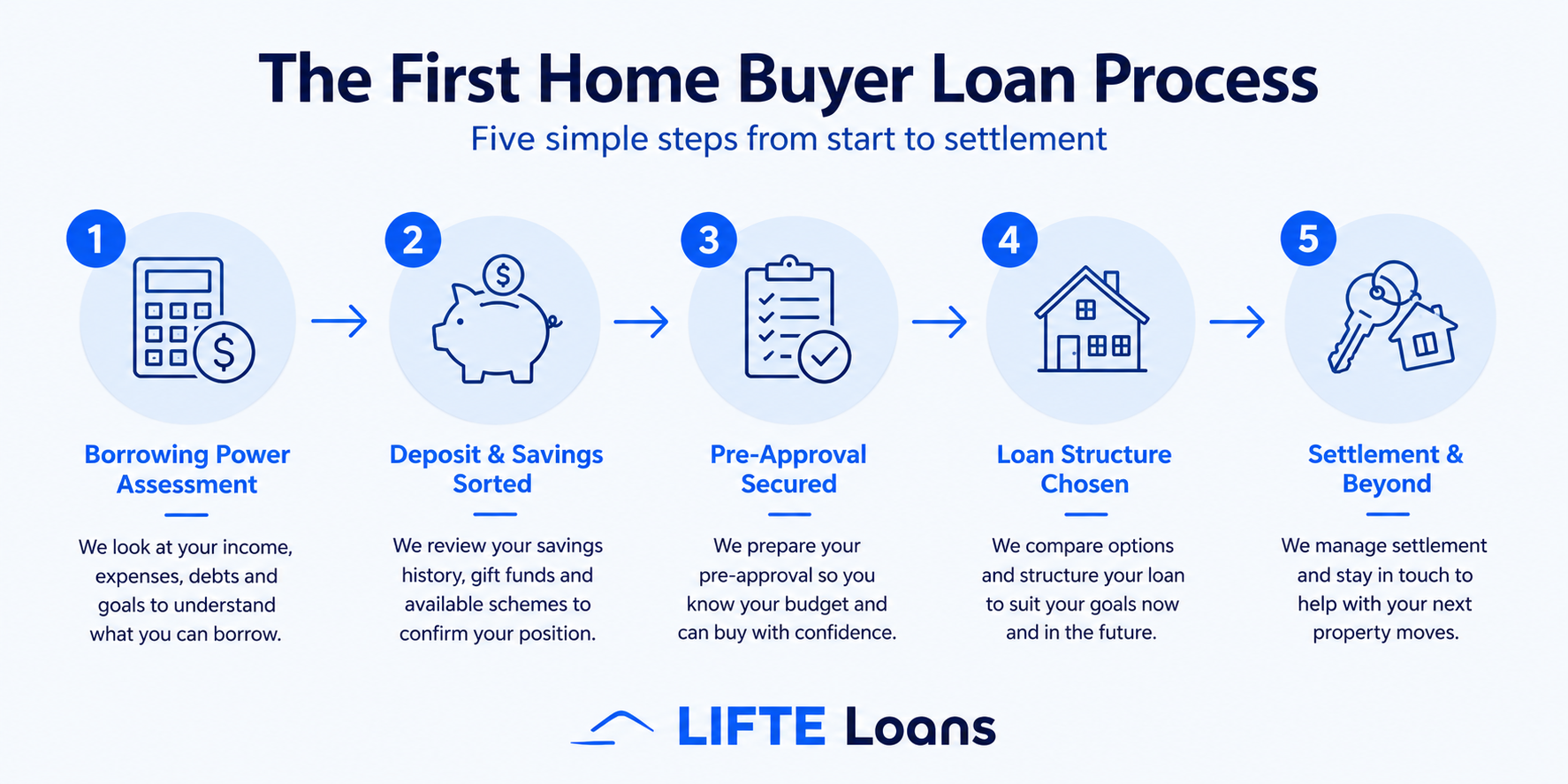
Step 4: Choosing how your loan is structured
This is where a generic approach can cost you over time. Fixed, variable, or split rates, offset accounts, and whether you want flexibility for extra repayments all affect how your loan behaves over the next five, ten, or twenty years. For someone focused on building toward a bigger property goal, this conversation is worth having properly rather than accepting the lender’s default.
Step 5: Settlement and what comes next
Once conditions are met and settlement happens, the keys are yours, but the finance conversation doesn’t end there. How your loan is set up now affects your options later, whether that’s renovating, using equity for an investment property, or refinancing as your income grows.
Common misconceptions
A few things I hear often from first home buyers in this position:
“I need a 20% deposit or I can’t do anything. ”Not necessarily true, depending on your situation and the schemes available.
“My visa status or overseas income makes this too complicated.” It can add steps, but it doesn’t rule things out, and it’s exactly the kind of detail worth discussing early.
“Pre-approval means I’m locked in with one lender.” It doesn’t, and it shouldn’t stop you from understanding your full range of options.
How I help
Reviewing your full financial picture, including income types that don’t fit a standard payslip.
Explaining your borrowing power and deposit position in plain English
Comparing loan structures based on your goals, not just what’s easiest to process
Managing the pre-approval and application process so it fits around your schedule
Thinking beyond this purchase to how it sets up your next move
When to reach out
The best time to start this conversation is before you’re seriously looking at properties, not after you’ve found “the one” and are trying to move fast. Even if you’re six to twelve months away from buying, understanding your position now means you’re house-hunting with real numbers instead of guesses.
Ready to get started?
If you’re a professional in Brisbane or South East Queensland thinking about your first home, get in touch and I’ll walk you through where you stand.
Lifte Loans 0420 604 107 | [email protected] | lifte.com.au
Jolly Dua | Credit Representative No. 531734 | National Mortgage Brokers, Australian CreditLicence391209